Disturbance 2026 Education Program
About:
Disturbance: Youth Education is a STEAM-based arts education initiative engaging approximately 25 fourth- and fifth-grade classrooms across Questa, Taos, Ranchos, Taos Pueblo, Lama, Red River, Talpa, and Peñasco. Led by The Paseo Project in partnership with Twirl, the program invites students to explore fire ecology, disturbance science, storytelling, and creative expression through hands-on workshops that integrate science and art.
Students participate in two classroom workshops that combine environmental science concepts with experiential, embodied art-making. Their work culminates in a large-scale, immersive public installation and four-day community event:
DISTURBANCE, A Forest In Motion:
A Youth Art and Ecology Event
October 1-4, 2026
Presented at The Taos Center for the Arts Stables Gallery this multi-site experience centers youth voices and regional ecological knowledge within a professional public context. Students transform fire ecology learning into a walk-through forest environment exploring growth, density, disturbance, regeneration, and ecological balance.
Program Goals
Increase student understanding of fire ecology and disturbance science
Foster creative problem-solving through STEAM learning
Connect youth to local landscapes, scientists, artists, and cultural institutions
Amplify student voices through a professionally presented public installation and event series
Engage educators and community members in shared ecological learning experiences
Field Trips: You can bring your youth groups on a field trip to the Disturbance art show at the Hotel Willa, through end of January 2027. Please contact amber@paseoproject.org, to schedule.
Program Activities
Up to two one-hour STEAM-integrated workshops per classroom
Instruction serving approximately 500 students (grades 4-5)
Guest artist and scientist engagement
Student artwork documentation and exhibition preparation
Family- and community-centered public programming (October 1-4, 2026)

Four-Day Public Event Structure
October 1 : STEAM Day (For Educators and Students)
Regional STEAM experience for ~150 students
Immersive exploration of the youth installation
Hands-on art-making and fire ecology learning
Artist and Paseo Intern engagement
October 2 : Educator Professional Development + Public Opening
Full-day educator institute in partnership with the Collaborative Teacher Institute and Imagine Children’s Museum
Evening public opening with tours, artist talks, and interactive programming
October 2 -4: Public Exhibition Days
Open community access to the installation
Guided tours and youth-led interpretation
Hands-on art stations and ecological learning activities
Program Themes
Students are exploring:
Fire as a natural and necessary part of forest systems
What a healthy/historical forest looks like
Forest density, fuel loads, and regeneration
Community stewardship and resilience
Indigenous and scientific perspectives on fire ecology
The curriculum uses:
embodied learning
role-play
movement
systems-based games
collaborative discussion
sensory exploration
to help students understand the complexity of fire-adapted ecosystems in Northern New Mexico.

Student Experience
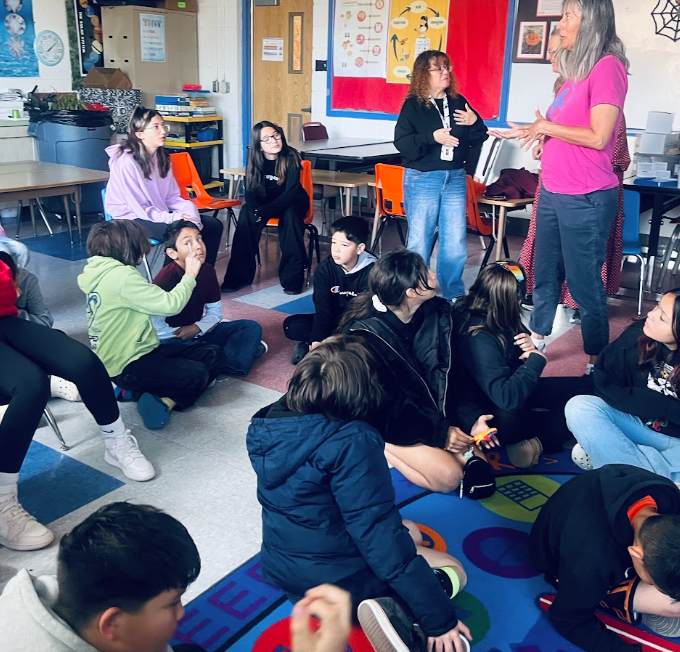
During the first classroom visit, students:
Build “living forests” with their bodies
Simulate overcrowded and healthy forests
Explore how fire spreads through different fuel conditions
Discuss the emotional and ecological realities of wildfire
Learn about regeneration and forest succession
During the second visit, students:
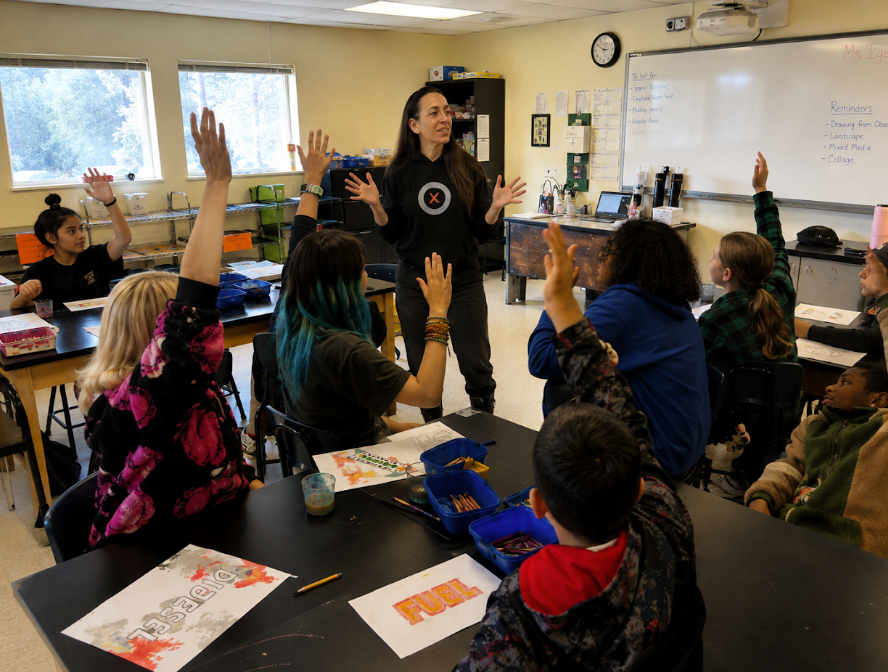
Respond artistically to ecological concepts
Create collaborative visual artworks
Develop pieces that will become part of a larger immersive community installation

Student Artwork in Development
Current student-created projects include:
mind maps and ecological systems drawings
word art created from student-generated fire ecology vocabulary
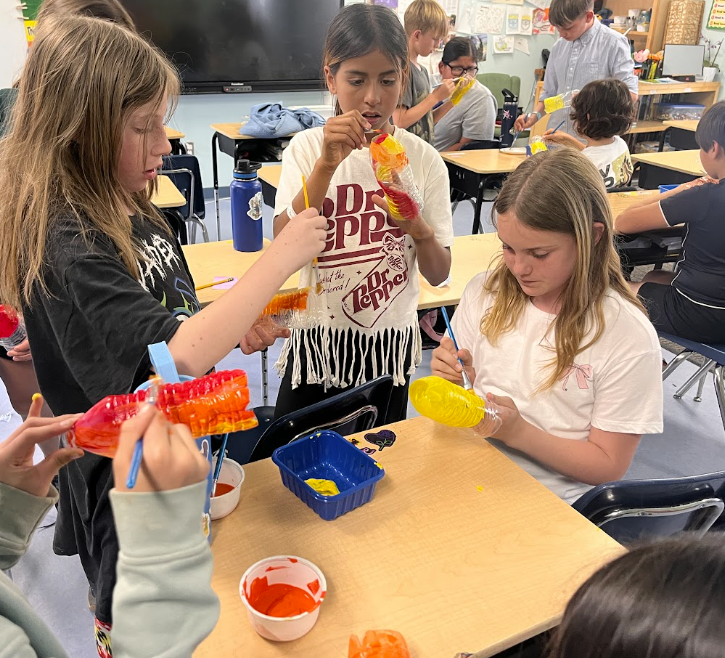
recycled plastic fire sculptures made from water bottles
cyanotypes
charcoal and ash drawings
pinch pots created with reclaimed local clay
ecological species studies
collaborative canopy and yarn web elements
The work combines:
science
ecology
systems thinking
storytelling
visual art
sensory experience
Youth Art Installation + Public Experience
The youth-created installation becomes a large-scale immersive ecological environment where visitors physically move through interconnected forest systems.
The current installation vision includes:
five ecological zones: growth, density, fire, regeneration, and return
suspended forest structures and sculptural elements
ecological webs and species drawings
soundscapes created with students
light and sensory installations
interactive participation stations
Visitors will move through ecological phases exploring:
growth
overcrowding
disturbance
after-fire transformation
regrowth
stewardship and balance
Interactive components may include:
planting seeds
contributing artwork
answering prompts such as:
“What is a healthy forest?”
“What role do humans play in forest systems?”
“What does resilience look like?”
The installation invites audiences to reconsider fire not simply as destruction, but as part of a living ecological cycle.
Become a Disturbance with us
Interested in hosting, supporting, or partnering with Disturbance: A Forest in Motion
We welcome collaboration with schools, cultural institutions, scientists, artists, and community organizations committed to youth education, ecological literacy, and place-based learning.