Avi Farber
Ojo Sarco, New Mexico

"Ember Echos : Recordings of Fire in the Landscape"
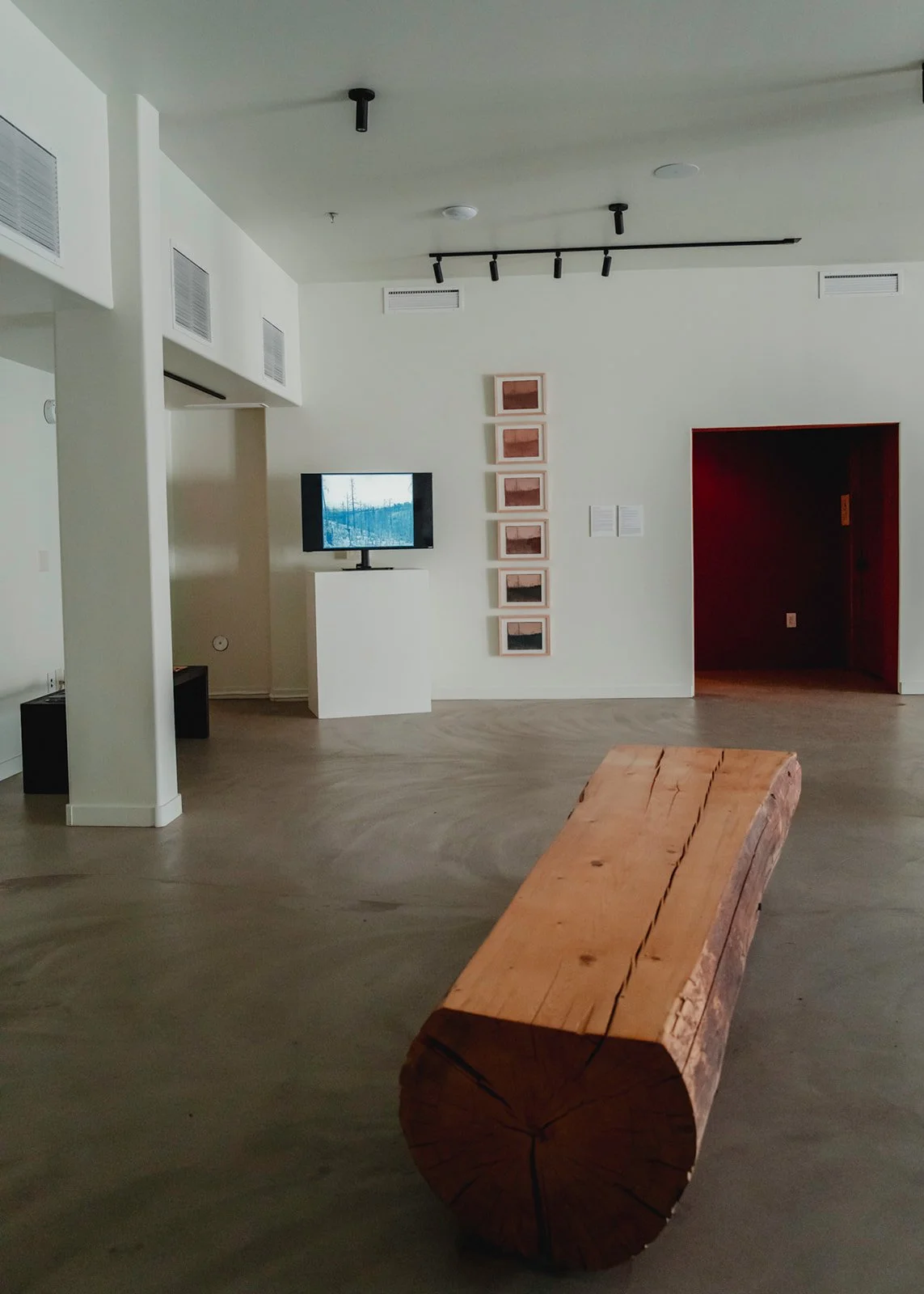
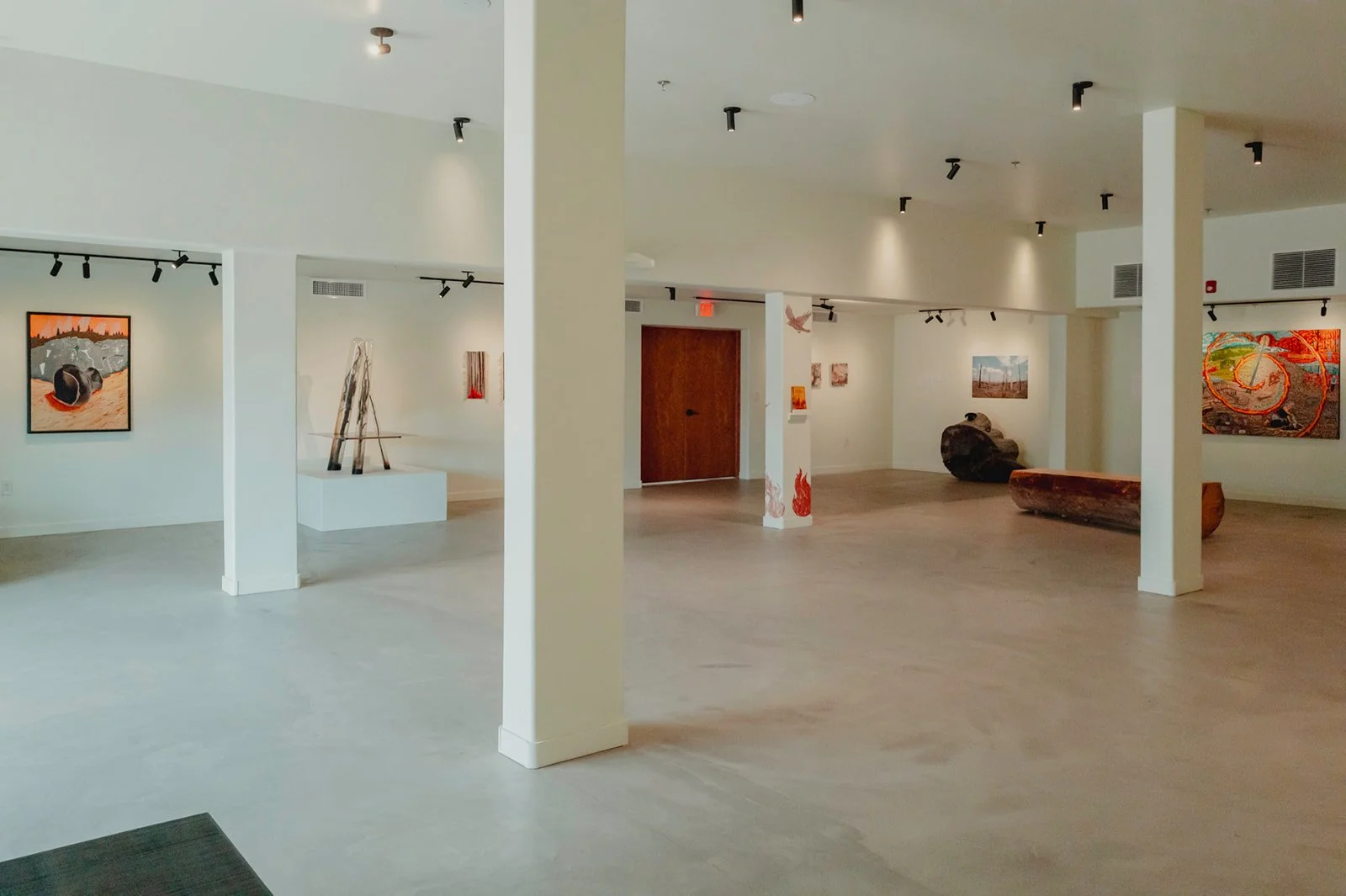
Ceramic panels made with clay harvested in Montana, Metal.
Artist Statement:
On June 26th, a lightning strike ignited the Beehive Fire near Tres Piedras, NM. The panels you see here were placed in the fire’s path. Over the past three years I have been setting these panels in fire-prone landscapes to become canvases for the fire itself—an invitation for the spirit of fire tell its own story as it moves over them.
The clay records this ephemeral moment of ecological transformation as fire visits the landscape. These are the first panels I have recovered after being “fired” by a wildfire. They offer an opening for us to have a new conversation with fire, a creative collaboration, and a marker for us to return to in reflection after the fire has passed.
Artist Bio:
Avi Farber’s work emerges with fire—both in the flame as it flows over clay in the wood kiln and in the spirit of a wildfire as its memory is recorded on his land-based art panels.
Years of watching fires move through mountains while working as a wildland firefighter have shaped his approach to ceramics, where landscapes, clay, and fire become active collaborators. This is a ceramic practice that takes place in and with the landscape.
Farber received his Master of Interdisciplinary Design (MDes) from Emily Carr University of Art and Design and a BA in Philosophy from Bates College. His love for mud began in his mom’s studio in Santa Fe, NM, where, as a child, he would press clay against his face, using his own head as a slump mold to make colorful masks. He now holds clay as a storyteller—a vessel that carries collective meanings, records reflections, and offers a space to reimagine our own beliefs. His work is represented by Form & Concept, G2 Gallery, and has been supported by residencies at the Archie Bray Foundation, the University of California Santa Barbara, the Clay Studio of Missoula, and the Material Matters Lab.
Scientists Statement:
ENERGY RELEASE COMPONENT
(en-ur-jee re-lees kum-pone-unt)
Not all fire releases energy in the same way.
Fire scientists use the Energy Release Component, or ERC, as an index of how much energy could be released by burning fuels under current conditions. ERC responds to the amount of available fuel and, especially, how dry those fuels are. As vegetation and dead wood lose moisture during hot, dry weather, more of that material becomes available to burn and potential energy release increases.
Unlike flame length or rate of spread, ERC does not describe the behavior of a particular fire. It describes the potential energy stored in the fuels before ignition. For fire managers, rising ERC can signal that fires may become more difficult to control and capable of producing greater effects.
A warming climate can push ERC higher by increasing evaporation, drying live and dead fuels earlier in the season, and extending the periods when fuels remain dry enough to burn. As hot, dry conditions become more persistent, landscapes can spend more days at elevated ERC — expanding the window in which fires have the potential to release large amounts of energy.
These ceramic panels make energy release physical. They were placed in an active wildfire, where heat transformed the clay much as it transforms materials in a forest. Wood generally begins sustained combustion around 570°F, while earthenware clay is typically fired at roughly 1,700–2,000°F. But temperature alone tells only part of the story. Ceramicists use the concept of “heatwork” to describe the combined effects of temperature and time. Wildfire works in a similar way: a brief flame and a large log smoldering in place may reach the same peak temperatures, but transfer very different amounts of energy into soil, vegetation—or these ceramic panels. The degree to which the tiles were transformed therefore reflects not simply how hot the fire became, but how much heat they absorbed and for how long.
Where heavy fuels burn for long periods, sustained heating can consume organic matter, damage roots, alter soil organisms, volatilize nutrients, and change the chemistry of carbon left behind.
A wildfire is not simply flame moving across a landscape. It is stored energy being released.
The marks on these panels are traces of that transfer: fuel became heat, heat moved into clay, and the fire left behind a physical record of its energy.
PHOTOS BY ALEX CANCRO
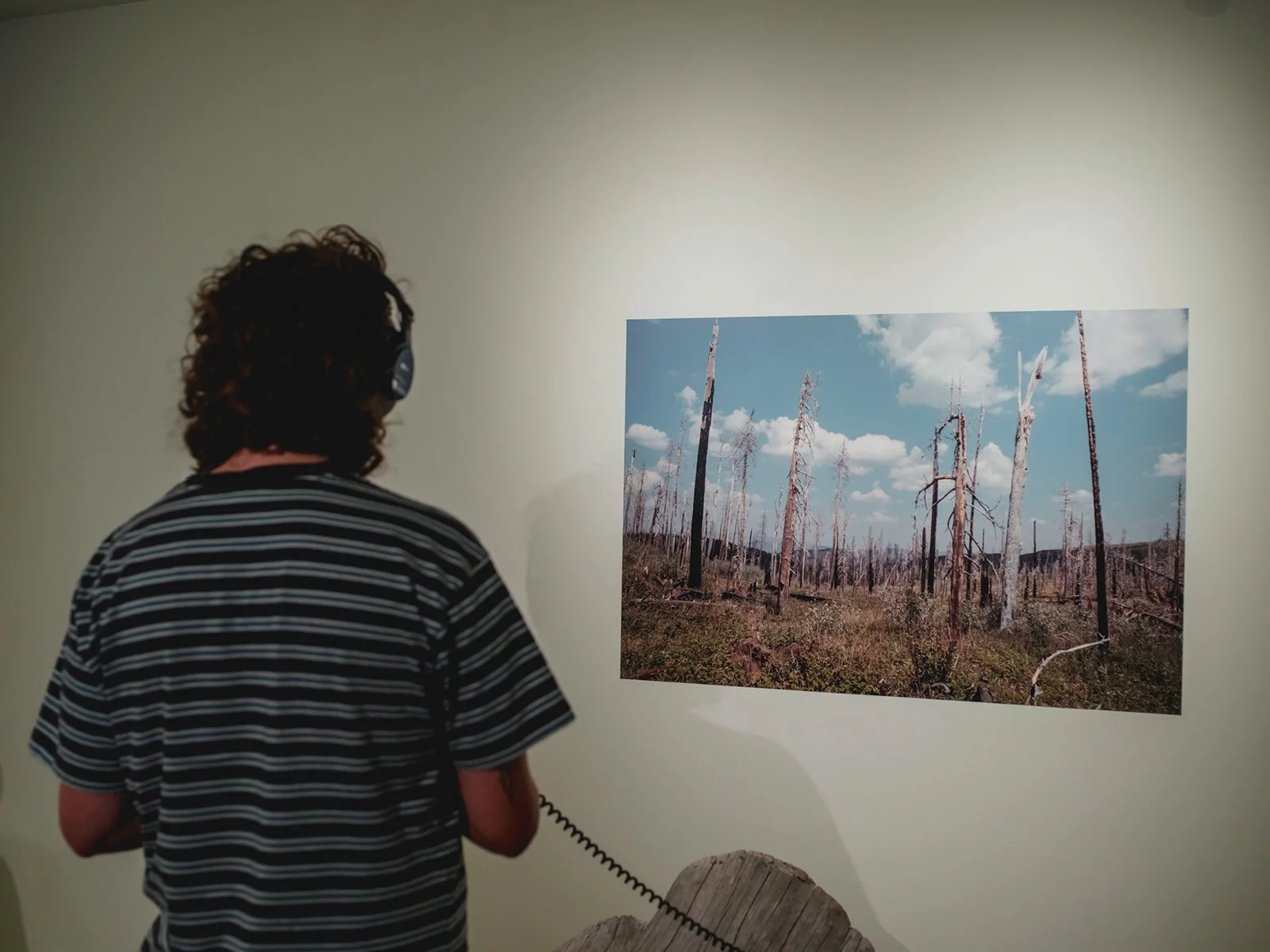
"Tears That Water a Mountain of Berries | Burn Scar Soundscape "
Solar Powered Soundscape. Binaural Microphone, Single Board Computer, Cell Connection, Headphones, Log totem from Hermits Peak Fire.
Artist Statement:
On June 26th, a lightning strike ignited the Beehive Fire near Tres Piedras, NM. The panels you see here were placed in the fire’s path. Over the past three years I have been setting these panels in fire-prone landscapes to become canvases for the fire itself—an invitation for the spirit of fire tell its own story as it moves over them.
The clay records this ephemeral moment of ecological transformation as fire visits the landscape. These are the first panels I have recovered after being “fired” by a wildfire. They offer an opening for us to have a new conversation with fire, a creative collaboration, and a marker for us to return to in reflection after the fire has passed.
Special Thanks to PPC Solar and Brownrice for supporting this installation.
Scientists Statement:
BIOPHANY
(beye-off-uh-nee)
A forest is filled with information we cannot see.
Elk bugle in the autumn frost. Birds sing to one another at dawn. Insects buzz and chirp through the afternoon. Scientists call the sounds produced by living organisms in a particular site “biophony.” It is the collective biological “voice” of a landscape.
For scientists, those sounds can become data. Passive acoustic monitoring uses microphones left in forests for days, weeks, or months to detect the telltale sounds of species that may be elusive, nocturnal, or difficult to observe directly.
The Mexican spotted owl (Strix occidentalis lucida) offers a compelling example. It nests and rests during the day in mixed-conifer forests across the Southwest. When it was first listed as a “threatened” species in 1993, biologists concluded that loss of late-successional forests— older forests with large trees and complex structure— was the primary threat to the owl’s survival. Protecting these stands became the key conservation strategy.
Over time, however, another threat became increasingly apparent. Decades of fire exclusion and accumulating fuels, combined with a warming and drying climate, increased the potential for high-severity, stand-replacing wildfire - fire that kills most of the trees across an area. When the owl’s recovery plan was updated in 2012, high-severity wildfire was identified as the primary threat to the owl.
This creates a difficult management question: Can forests be thinned to reduce wildfire risk while retaining the habitat owls need?
Research on Tribal forests offers important clues. Owls have been found nesting and roosting in managed tribal forests with less canopy cover and lower volumes of standing timber than traditionally associated with their habitat. Researchers can combine measurements of forest structure with monitoring of occupancy and reproduction to understand how management affects the species.
Sound is an effective way to measure change. Microphones can document not only whether an owl is present, but when and how often it calls—and, over time, how wildlife activity changes in response to fire, forest management, and other disturbances. Listening across many species can reveal changes in the broader biophony of a recovering landscape.
The microphone connected to these headphones becomes a kind of ecological monitoring station. As the burn scar changes, so will the community living within it—and the sounds that community produces.
Biophony allows us to hear disturbance unfold: who remains, who returns, who arrives—and who is missing.
PHOTOS BY ALEX CANCRO
“Have a Seat Said my Grandmother”
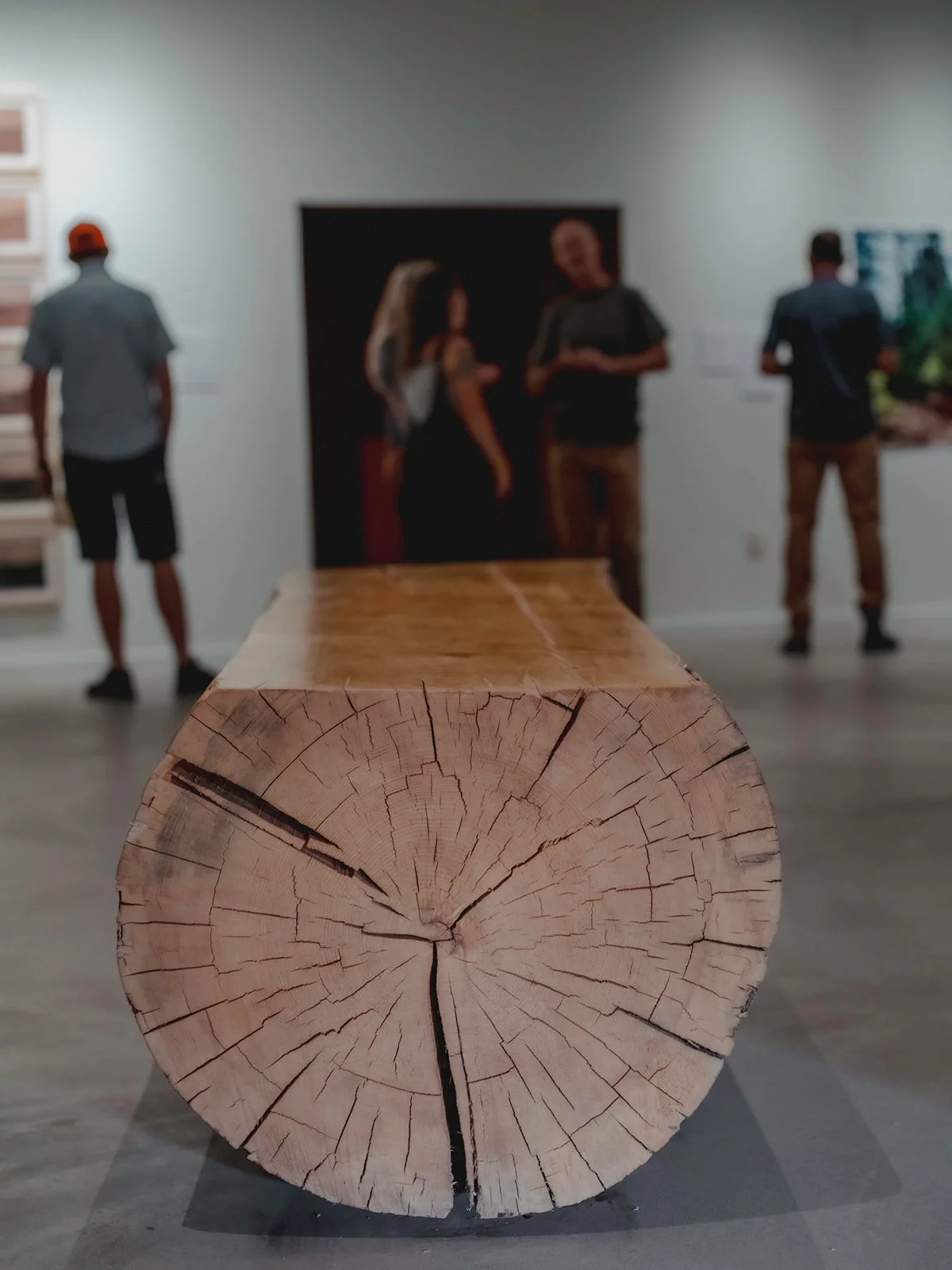
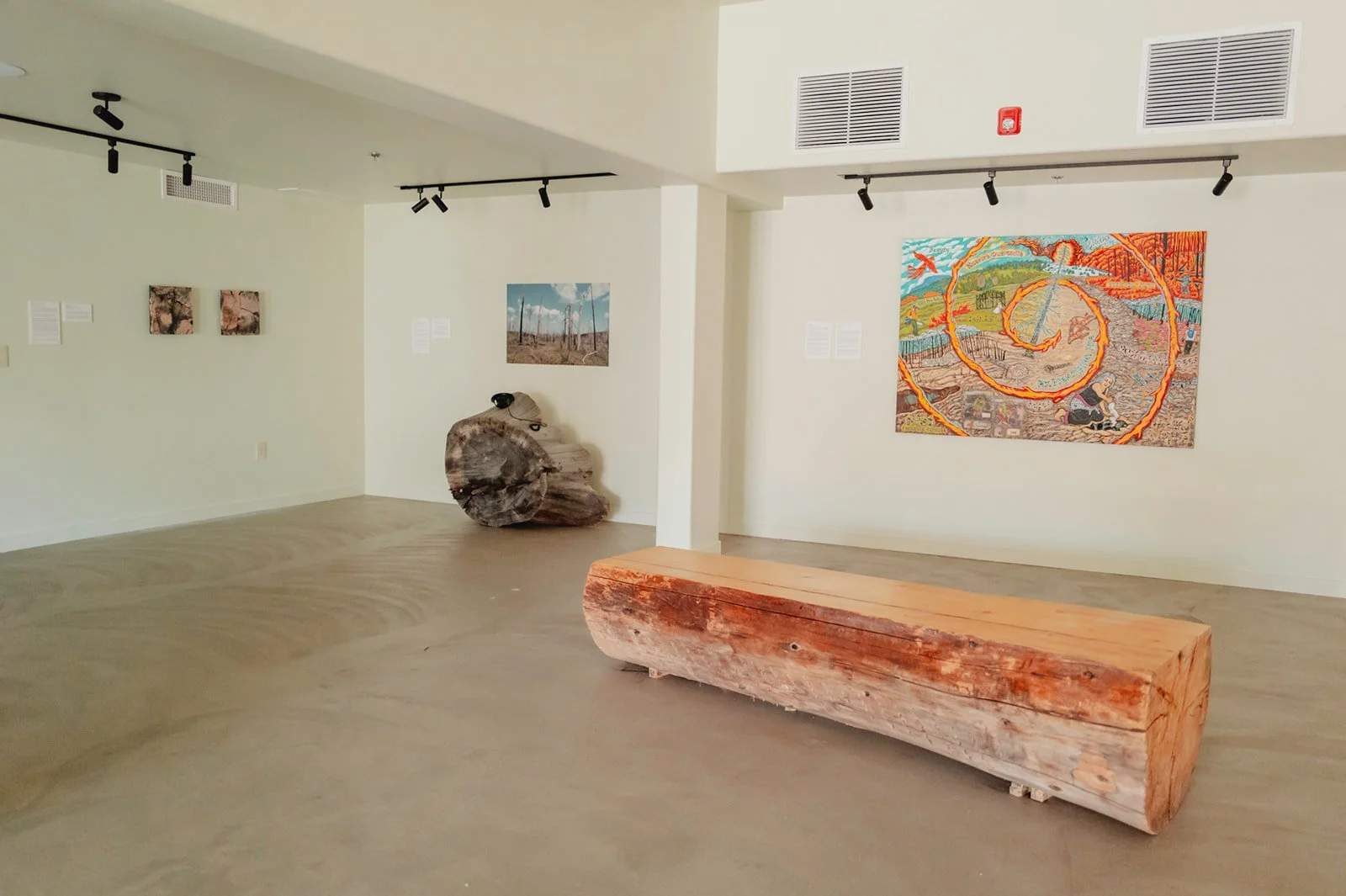
Furniture, timber salvaged from the Hermits Peak/Calf Canyon burn scar.
Artist Statement:
I lived in Ojo Sarco, a small village in Northern New Mexico, part of the Las Trampas Land Grant of 1751. This spruce log was burned in the Hermits Peak fire, then logged and deposited at the Ojo Sarco Fire department. The burned lumber is part of a program that offers free community firewood— a consolation for the communities who lost their forests.
The seedlings of these trees grew before land was owned on paper, before lumber was traded for money. A time when trees would grow and burn in rhythm with drought and lightning. On cold mornings I would join the other Leñeros to cut wood at the fire department, but these logs were too beautiful to burn for a second time. Better suited to hold our weight, to hold us as we sit. To think about these trees more closely.
Scientists Statement:
CLIMATE VELOCITY
(kly-muht vuh-lah-suh-tee)
It takes a long time to grow a tree this big.
This spruce grew at roughly 10,000 feet in northern New Mexico, near the Rito Angostura. Year by year, it added wood and roots, responding to the particular combination of temperature, moisture, snow, and season that defined this place. It took decades—perhaps much longer—to grow a trunk more than two feet across. It was burned during the Hermit’s Peak/Calf Canyon Fire in 2022.
The climate has always changed, and the make-up of forests on a particular site have changed with it. Over long periods, tree species have migrated, forests have expanded and contracted, and ecosystems have reorganized. But the current pace of human-caused climate change presents a different challenge.
Scientists use the term “climate velocity” to describe how quickly climatic conditions shift. In mountainous topography, rapid warming means you have to move upslope to find cooler climatic conditions. But forests move much more slowly. Slow-growing trees migrate across generations: seeds disperse, seedlings establish, mature, and eventually produce the next generation.
When the climatic velocity and the pace of tree regeneration fall out of sync, forests can become increasingly mismatched with the conditions around them. Drought can stress mature trees. Warmer conditions can amplify insect activity. Wildfire can rapidly remove established forests, while seedlings attempting to return encounter conditions different from those in which their predecessors grew.
The trunk beneath you is evidence that more than a century ago, this one spruce seedling found the conditions it needed to survive—and that those conditions persisted long enough for it to become a large tree.
But it’s not a given that the offspring of this same tree will find the same comfortable niche on the same site today or in the future. By studying seed dispersal, regeneration, and climate, researchers can model how quickly different tree species may shift their ranges—and whether they can keep pace with changing conditions.
PHOTOS BY ALEX CANCRO