Erika Osborne
Fort Collins, Colorado
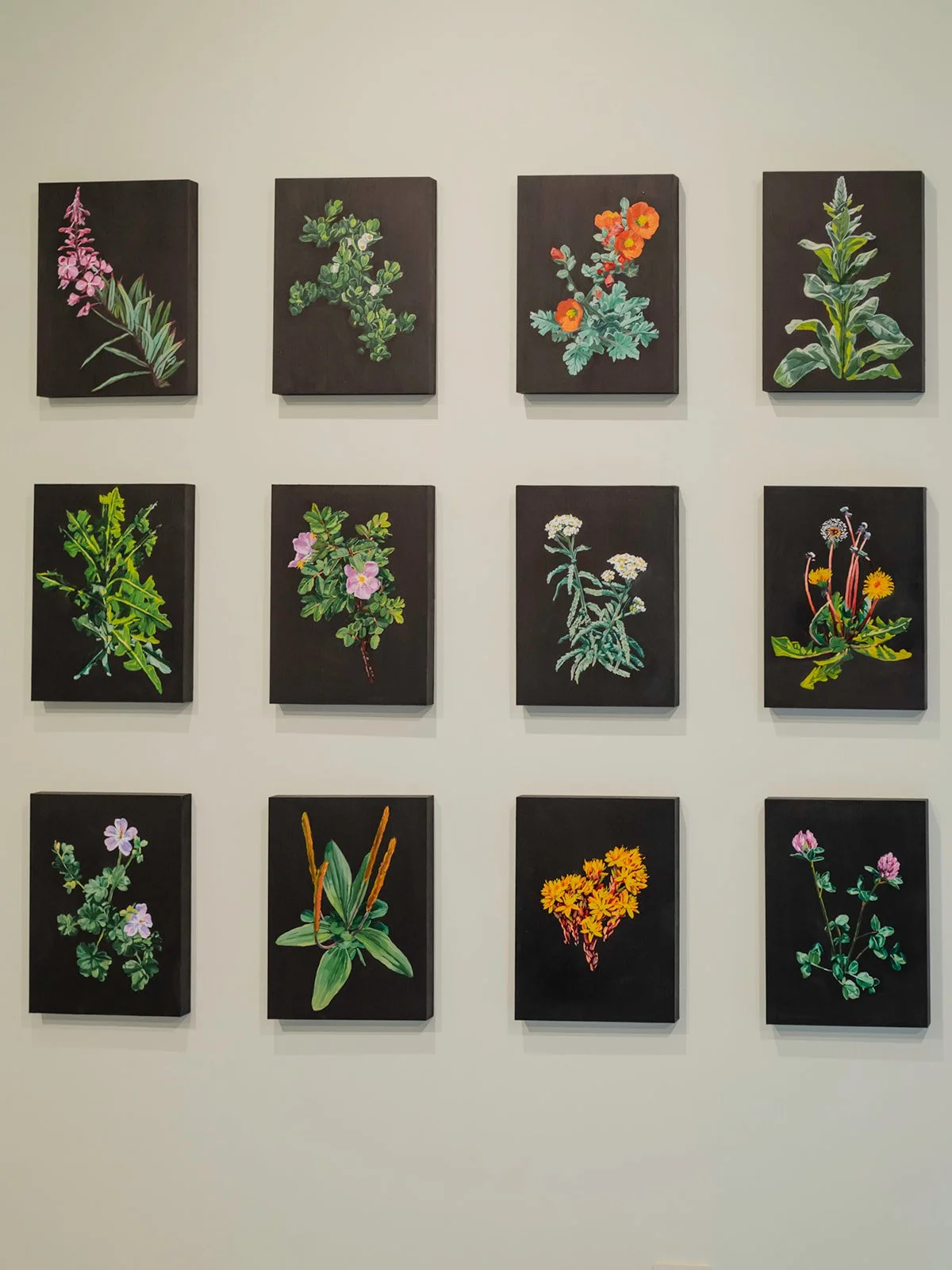
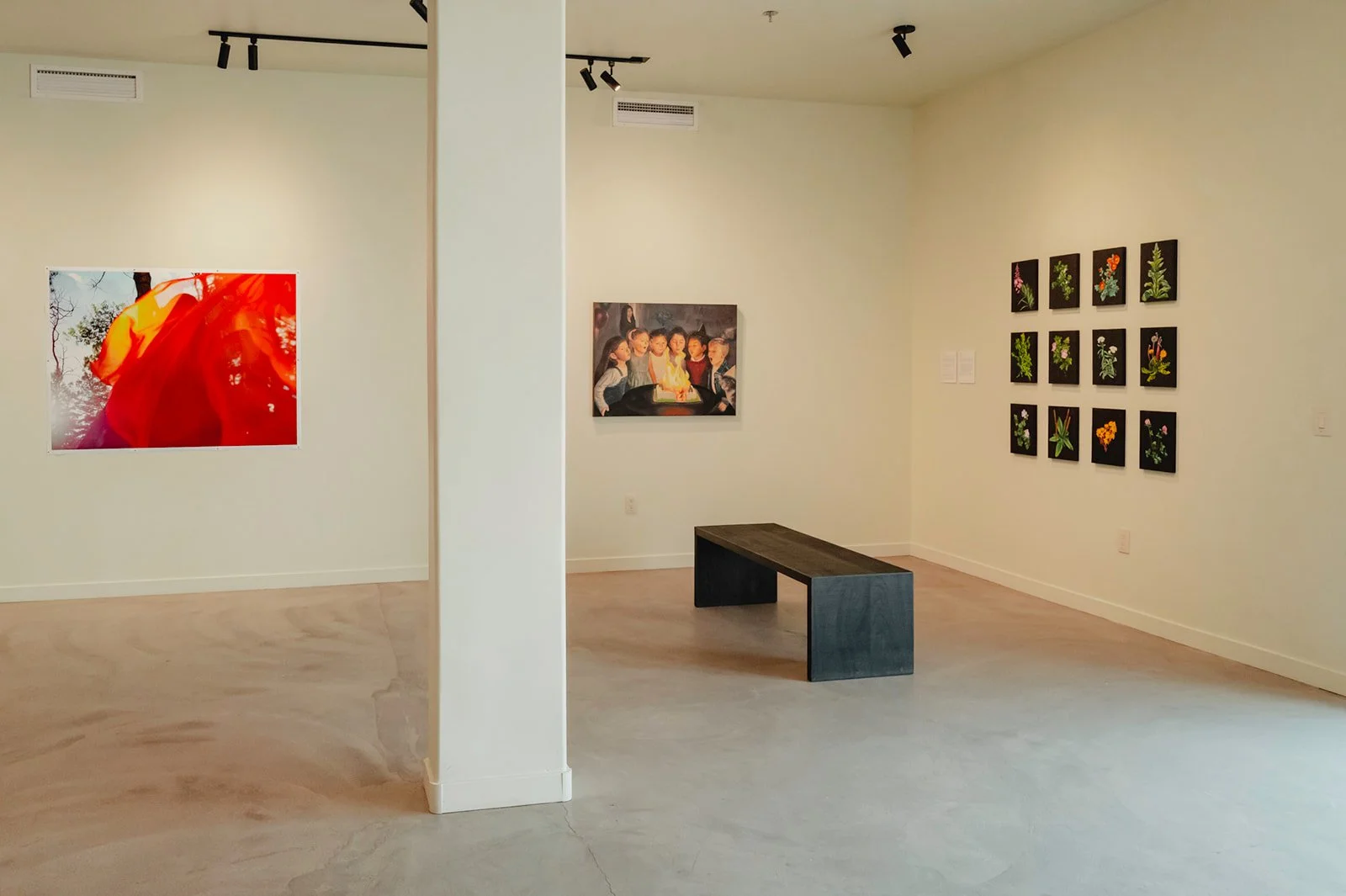
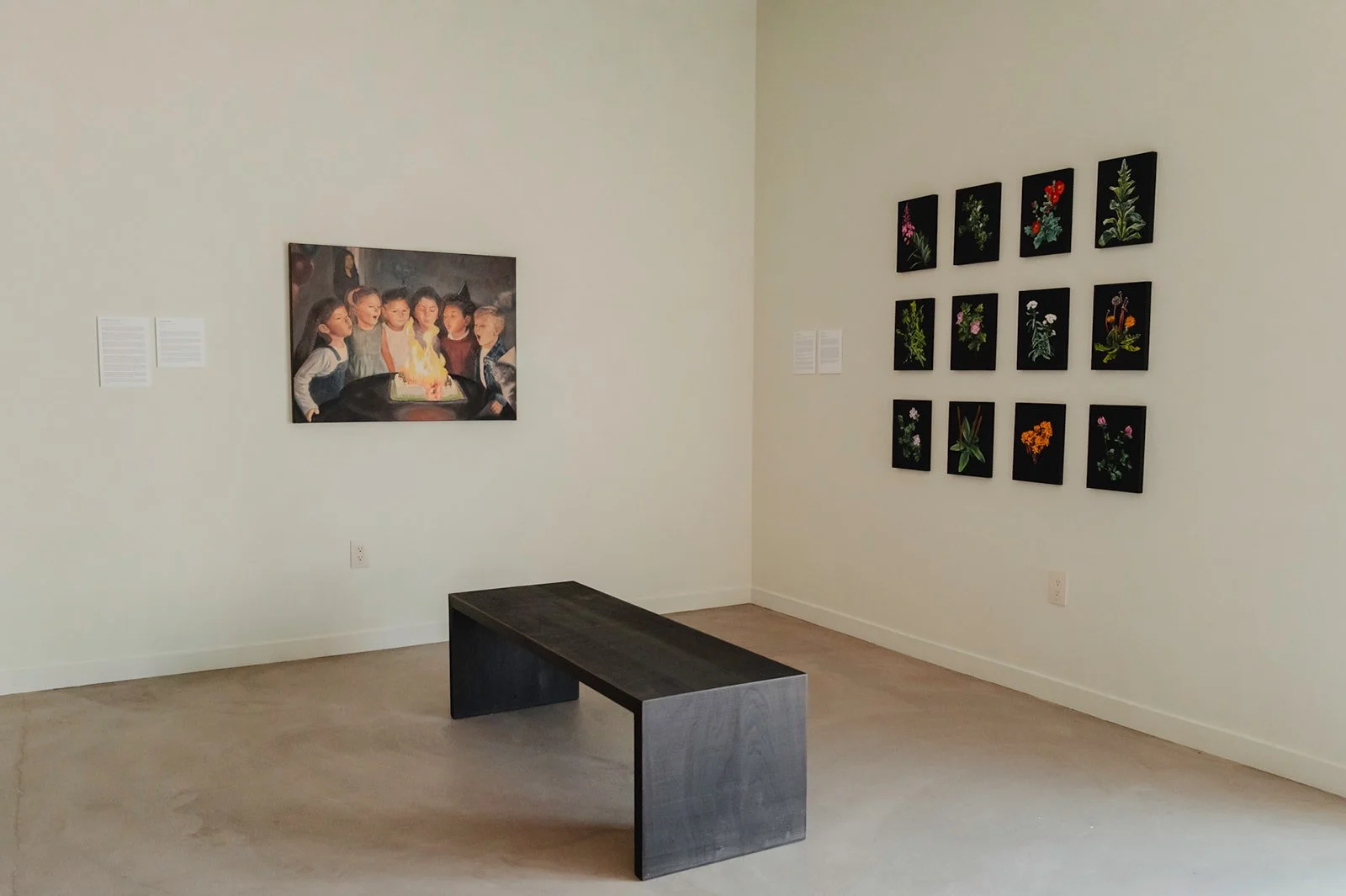
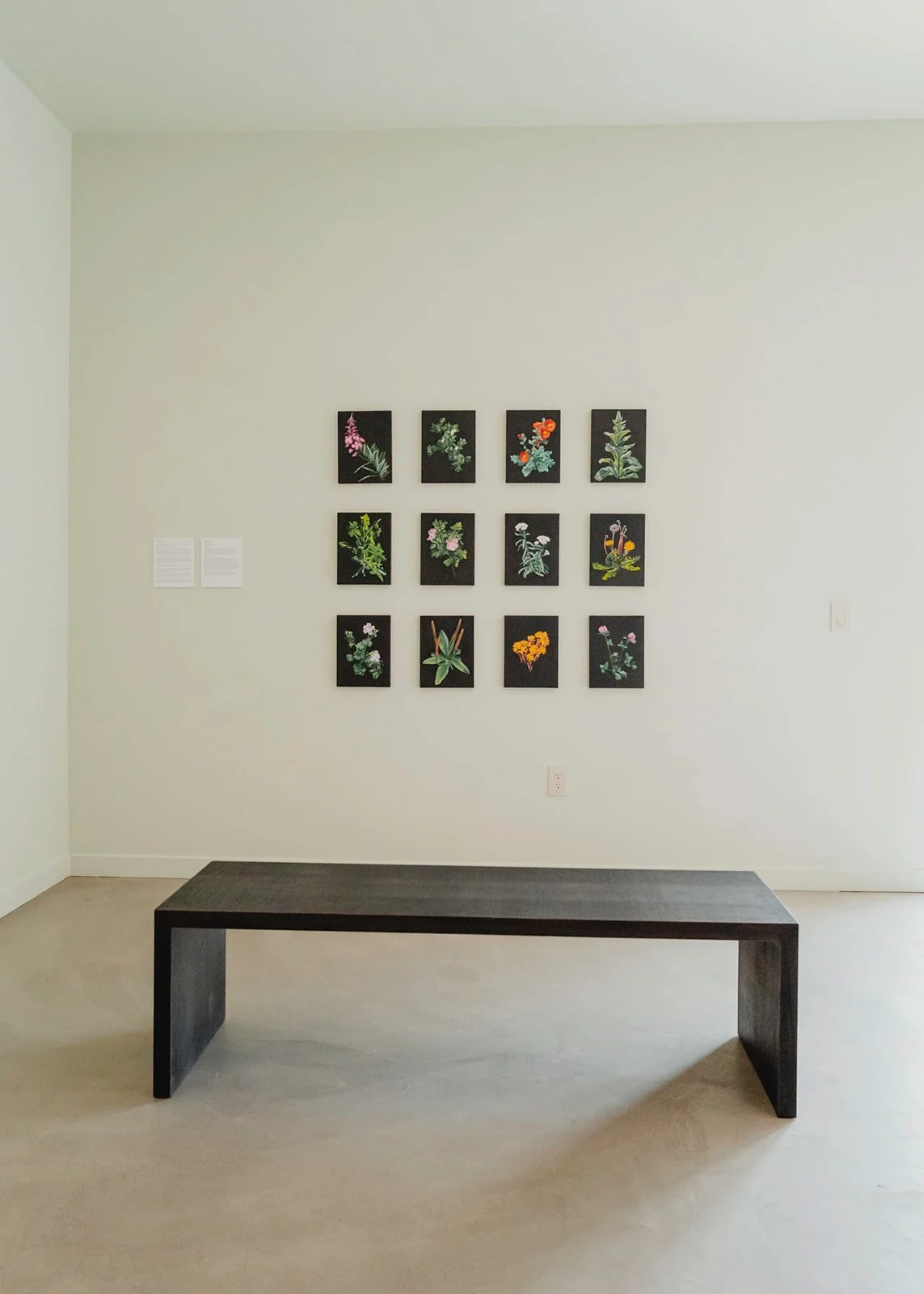
"Fire’s First Aid Kit"
Oil and Wildfire Charcoal on Board
12 pieces - 12in x 9in
Artist Statement:
As I visited the burn scars in the Taos region with my artist and scientist colleagues, I inventoried and collected data on the plants emerging from the ground post-wildfire. I cataloged their names, researched their responses to disturbance, and investigated their biological traits. As a forager and plant medicine maker, I also focused my attention on the specific energies of each plant I encountered, attempting to tune into its individual nature and purpose within the system.
It fascinates me that after a wildfire, the first plants to surface are the medicines— those allies that have been used for millennia to heal the human species in times of trauma. Science tells us that these plants return first because they are often rhizomatic (spreading via roots beneath the ground), nitrogen fixers, or those special species adapted to disturbance. This is true, and yet the plants that emerge first from the burned ground are also those medicines used to treat burns and heal wounds, reduce inflammation, clear the lungs of smoke and toxins, restore moisture to the system, detoxify the organs, and prepare the body to bring new life into the world. I do not think it is a coincidence that these same healing qualities are needed in forest ecosystems after wildfire. Perhaps our human bodies and those of the mountains, plants, animals, and insects are not all that different after all.
The 12 paintings that make up Fire's First Aid Kit attempt to honor both rational, scientific observation and the more intuitive nature of plant energetics and folk medicine. Because somewhere between science and intuition, we find understanding.
Artist Bio:
Erika Osborne lives in Fort Collins, Colorado with her husband, artist Tracy Stuckey, and their two children Sonora and Bridger. Erika’s creative work addresses cultural connections to place and environment, especially in the mountains and deserts of the western United States. She has exhibited extensively nationally and internationally, with exhibitions at institutions such as the Museo de Arte de Baja California Sur (Mexico), Koumi Kogen Museum (Japan) the Phoenix Art Museum, the Carnegie Museum of Art, the Nevada Museum of Art and the Chautauqua Institute. Erika has been the recipient of numerous grants and awards, including a Fulbright fellowship. Her work has been highlighted in several books surveying land and environmental art, as well as in publications such as New American Paintings, Art Papers, Sculpture Magazine and Southwest Art Magazine. Erika is currently represented by Visions West Contemporary.
Erika Osborne is a Professor in the Art and Art History department at Colorado State University. For the past 18 years, Erika has taught painting and drawing alongside environmental field courses for artists such as Mexico: Art Meets Environment, Art and Environment, Art in Forest Ecosystems, Cultural Extraction: Energy in the Humanities, Land Arts of the American West, Wilderness Studio and Place: Appalachia. Erika has written about her pedagogical work in books and journals including, Arts Programming for the Anthropocene: Art in Community and Environment and Making the Geologic Now: Responses to Material Conditions of Contemporary Life.
Scientists Statement:
EARLY-SUCCESSION
(ur-lee suk-sesh-uhn)
After a wildfire, the forest floor can appear devastated. Yet beneath the ash, recovery often begins almost immediately.
Many of the first plants to emerge are not newcomers at all. Their seeds may have lain dormant in the soil for years, waiting for the right conditions. Others survive the fire underground as bulbs, rhizomes, or deep roots, ready to send up new shoots once sunlight reaches the forest floor. Fire removes accumulated leaf litter, releases nutrients, warms the soil, and opens the forest canopy—creating a brief window of abundant light and reduced competition.
The result is an extraordinary flush of understory diversity. Wildflowers, grasses, shrubs, and medicinal plants often appear in combinations and abundances that were absent before the fire. For pollinators, birds, and wildlife, this burst of growth provides food and habitat. For people, it has long offered opportunities to gather culturally important and medicinal plants that thrive in recently burned landscapes.
Ecologists refer to this stage of recovery as early succession—the first phase in a decades-long process of ecological change.
Early-successional plants prepare the ground for what comes next — stabilizing soil, rebuilding organic matter and nutrients, and creating cooler, moister microsites where later-successional species can take root.
In later successional chapters, shrubs expand and young trees establish. Shade gradually returns, and the composition of the understory changes again. Over years and decades, different species take turns dominating the landscape, each responding to changing conditions created by those that came before.
In this way, disturbance is not simply an interruption of nature—it is one of the processes that creates it. The plants in these paintings represent the opening movement of ecological renewal: the first green notes in a landscape beginning, once again, to transform.
PHOTOS BY ALEX CANCRO